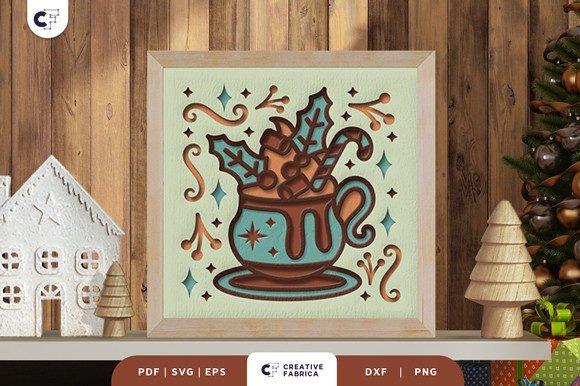
Retro Christmas Hot Chocolate 3D SVG Shadow Box
As a digital publisher and blog designer, my first interaction with any new graphic design asset is always critical. When I opened the files for the Retro Christmas Hot Chocolate Shadow Box, the immediate impression was one of curated nostalgia. This is not merely a generic holiday clipart collection; it is a sophisticated, layered composition that evokes warmth, tradition, and tactile comfort. For content creators operating in the lifestyle, DIY, or seasonal niches, this asset establishes an editorial mood that feels both intimate and professionally crafted. The retro aesthetic taps into a powerful emotional trigger for readers, suggesting authenticity and timelessness rather than fleeting trends. In a saturated market of modern minimalist holiday content, this design stands out by offering visual texture and depth that signals high-quality editorial design.
Elevating Editorial Layouts and Blog Graphics
In my daily workflow managing content calendars and site aesthetics, finding versatile visuals that maintain brand consistency is a constant challenge. The Retro Christmas Hot Chocolate Shadow Box serves as an exceptional anchor for various publishing formats. As a featured image for a blog post about vintage holiday traditions or cozy winter recipes, it immediately communicates the article's tone before the reader processes a single word of text. The square format is particularly advantageous for web design, as it adapts seamlessly to grid-based layouts without requiring aggressive cropping that might destroy the intricate layering details.
Beyond standard blog headers, this asset shines when repurposed for Pinterest pin graphics. The vertical adaptability of the shadow box elements allows me to create tall pins that retain visual clarity even at small sizes. For newsletter creators, using this design as a header graphic can significantly boost open rates by promising a visually rich experience inside. It also functions beautifully as a cover for a digital guide or printable recipe card, transforming a simple PDF download into a perceived high-value product. When integrated into a Canva template, the separated layers allow for dynamic customization, enabling publishers to adjust colors or remove elements to match specific campaign themes while retaining the core retro identity.
Driving Click-Throughs Through Visual Hierarchy
Performance in content marketing is often dictated by how quickly a user understands the value proposition. The Retro Christmas Hot Chocolate Shadow Box supports stronger visual hierarchy through its inherent depth. Unlike flat vector illustrations, the shadow box style creates natural focal points where headlines or call-to-action buttons can be placed without competing with the artwork. This spatial awareness is crucial for affiliate marketing content, where the goal is to guide the eye from an engaging visual to a product recommendation or link. By using this asset as a background or accent in social media graphics, I have found that engagement metrics improve because the design feels less like an advertisement and more like an invitation to a story.
Furthermore, consistent use of such distinct design assets builds long-term brand identity. Readers begin to associate this specific retro warmth with your publication, creating a subconscious trust signal. When a subscriber sees a thumbnail featuring this hot chocolate shadow box style in their feed, they recognize the source instantly. This recognition is vital for small business branding and creative entrepreneurs who need to maximize the impact of every visual asset they acquire. The professional finish of the 3D SVG ensures that whether it is displayed on a retina screen or printed as a physical decoration, the quality remains uncompromised, reinforcing the authority of the content platform.
Strategic Placement and Contextual Awareness
While the Retro Christmas Hot Chocolate Shadow Box is a versatile tool, experienced publishers know that context dictates success. This asset performs best in hero sections, category thumbnails for "Holiday" or "Crafts," and as visual breaks within long-form storytelling articles. It is ideal for lead magnets related to holiday planning, gift guides, or nostalgic memoirs. However, caution is required when deploying this design in certain environments. On mobile devices, the intricate layering can sometimes appear cluttered if scaled down too aggressively. I always recommend testing the asset as a thumbnail on a phone screen to ensure the central mug and steam elements remain distinct against the background layers.
Additionally, this design may clash with ultra-minimalist corporate websites or serious financial content where playful nostalgia could undermine the intended professional tone. It is also important to consider contrast; placing white text directly over the complex mid-tones of the shadow box without an overlay will harm readability. Always prioritize accessibility and legibility over decorative flair. For text-heavy blog images, use the shadow box as a border or corner accent rather than a full bleed background to prevent cognitive overload. Understanding these boundaries ensures the asset enhances the user experience rather than detracting from the core message.
Publisher Notes: Technical Workflow and Licensing
Before integrating the Retro Christmas Hot Chocolate Shadow Box into a live production environment, several technical checks are mandatory. First, verify the file integrity of the 3D SVG. Ensure all layers are properly grouped and named, which saves hours of frustration when importing into cutting software or design platforms. Test the color palette against your website’s existing CSS variables to ensure harmony; you may need to adjust the saturation to match your site's specific retro filter. Typography pairing is equally critical. This asset demands fonts with personality; try pairing it with a bold serif for headlines to echo the vintage print aesthetic, or a clean sans-serif for body copy to maintain modern readability. Avoid overly ornate script fonts that might compete with the detailed paper-cut lines.
From a business perspective, always confirm the commercial license terms before using this asset on monetized pages, ad-supported blogs, or paid digital products. Understanding whether you can use the design in end-products for sale versus personal use protects your business from legal risks. Also, consider web performance. While SVGs are generally lightweight, complex shadow boxes with hundreds of nodes can slow down rendering. Optimize the vector paths using tools like SVGOMG before uploading to your CMS. Finally, remember that this is described as a layered, square paper cutting template originally intended for crafters. As digital publishers, we are adapting a physical craft medium for screens. Respect the origin of the design by maintaining its tactile illusion; avoid adding heavy drop shadows or glossy effects digitally that would contradict the matte paper aesthetic. By treating this digital download with technical precision and editorial respect, it becomes a cornerstone asset for a successful holiday content strategy.