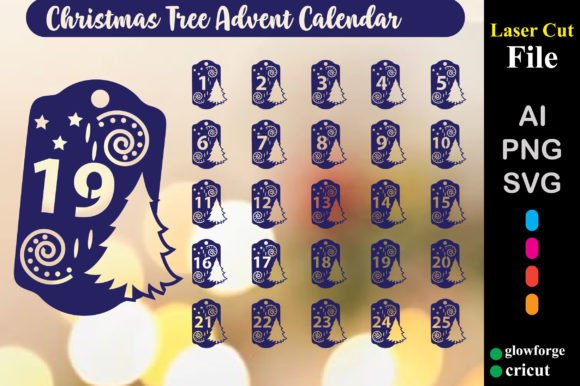
Christmas Tree Advent Calendar Countdown Review
As a professional embroidery designer and product reviewer, I approach every new digital asset with a critical eye toward production reality. When evaluating the Christmas Tree Advent Calendar Countdown, my primary focus is not just on the festive aesthetic, but on how this design translates from screen to fabric. For makers, Etsy sellers, and small business owners, a beautiful preview image means nothing if the stitch-out fails on actual garments or home goods. This review breaks down the practical application of this machine embroidery design for real-world commercial and personal projects.
First Impressions and Design Personality
The Christmas Tree Advent Calendar Countdown immediately establishes a nostalgic yet functional mood. Unlike generic holiday clipart, this design carries the visual weight of tradition. The layout suggests a structured countdown element, which inherently adds value to any finished product because it serves a purpose beyond decoration. As a 3D SVG vector file, the lines are crisp and scalable, which is essential when converting to an embroidery file. However, scalability in vectors does not always guarantee clarity in stitches. The design’s personality feels best suited for heirloom-quality items rather than fast-fashion trends. It evokes a sense of patience and anticipation, making it ideal for personalized gifts that are meant to be kept year after year.
Real-World Application: The Custom Tote Bag Test
To truly evaluate this design, I mentally placed it onto a heavy canvas tote bag intended for a boutique holiday collection. Tote bags are a staple for craft businesses, but they present specific challenges due to fabric texture and weight. In this scenario, the Christmas Tree Advent Calendar Countdown performs exceptionally well as a centerpiece. The vertical orientation of a tree fits naturally within the rectangular constraints of a bag panel without requiring excessive hoop size adjustments.
For a custom apparel project like a sweatshirt, the design offers excellent placement opportunities on the back yoke or centered chest. Because advent calendars imply interaction, placing this design where the wearer can easily see it—or where others can engage with it—maximizes its impact. If you are creating baby embroidery items, such as a nursery wall hanging or a keepsake blanket, the softer lines of this design work beautifully. However, for baby clothes specifically, I would advise simplifying the color palette to reduce stitch density against delicate skin. As a tote bag design or sweatshirt embroidery piece, it strikes the right balance between festive cheer and wearable art.
Navigating Fabric Constraints and Hoop Sizes
While the Christmas Tree Advent Calendar Countdown is versatile, it requires careful consideration regarding substrate selection. Detailed holiday embroidery demands stability. If you plan to use this on stretchy fabrics like jersey knits or lightweight thermal waffle weave, you must use aggressive stabilizer strategies. A cut-away stabilizer is non-negotiable here to prevent the registration of small calendar details from shifting during stitching.
Small hoop sizes pose the most significant risk for this design. Advent calendars often contain numerical elements or intricate branches. When scaled down below four inches, running stitch details can become lost, and satin stitch columns may become too narrow to anchor properly. Always confirm your hoop size capabilities before purchasing. If you are working with textured fabrics like burlap or linen tea towels, the design’s fill stitch areas must be dense enough to prevent the base fabric from showing through, yet open enough to avoid creating a bulletproof patch effect. Dark fabrics also require testing; ensure your thread colors have sufficient contrast so the countdown numbers remain legible against navy or forest green backgrounds.
Elevating Product Value and Customer Trust
For Etsy sellers and handmade shop owners, the perceived value of a finished product relies heavily on execution quality. A clean stitch-out of the Christmas Tree Advent Calendar Countdown signals professionalism. Customers associate precise registration and appropriate stitch density with high-end craftsmanship. When this design is executed correctly on a pillow cover or apron, it transforms a simple textile into a seasonal ritual object. This emotional connection drives buyer engagement and justifies premium pricing.
Furthermore, using a cohesive design asset like this helps build brand consistency. If you offer a matching set—an embroidered patch for a child’s coat and a coordinating kitchen towel—you create a collection rather than isolated items. This strategy increases average order value. The "countdown" aspect also encourages early purchasing; customers buy these items in November to use throughout December, extending your sales window beyond last-minute gift rushes. Professional presentation matters, so utilize printable mockups to show clients exactly how the scale will look on their chosen item before you begin stitching.
Critical Designer Notes for Production Success
Before loading this digital embroidery file into your machine, adhere to these professional best practices to ensure commercial-grade results:
- Verify File Compatibility: The product description specifies receipt of SVG vector files. Confirm whether your embroidery software or digitizer can convert these vectors into machine-readable formats (PES, DST, JEF) suitable for your specific equipment. Do not assume pre-digitized embroidery files are included unless explicitly stated.
- Test Stitch Density: Always run a test stitch on scrap fabric identical to your final project. Check if the fill stitch is too dense for lightweight materials or too sparse for heavy canvas. Adjust pull compensation settings to account for fabric push-and-pull.
- Thread Color Contrast: Review your thread colors against both light and dark fabric backgrounds. An advent calendar relies on readability; if the numbers blend into the background, the function is lost. Consider using a metallic or high-sheen rayon thread for the calendar markers to make them pop against matte cotton threads.
- Licensing Confirmation: Before listing any finished product or selling the digital assets themselves, rigorously check the license terms. Ensure you have commercial rights for physical products versus digital redistribution. Protecting your business starts with respecting intellectual property.
- Mockup Validation: Create black and white mockups to assess value contrast independent of color. If the design reads clearly in grayscale, it will likely succeed in full color. This step is crucial for marketing photos and ensuring accessibility.
Final Verdict for Makers and Sellers
The Christmas Tree Advent Calendar Countdown represents a strong contender for holiday season production, provided it is treated with technical respect. Its strength lies in its dual nature as both decoration and interactive tool. For the creative entrepreneur, it offers a pathway to higher-value custom apparel and home decor. For the hobbyist, it provides a meaningful project that celebrates the season's anticipation.
Success with this design depends entirely on your willingness to test and adapt. Respect the limitations of small hoops and textured fabrics. Prioritize stabilizer choice over speed. By applying these professional standards, you ensure that your holiday embroidery projects are not just festive, but durable, legible, and worthy of the memories they are meant to hold. Whether you are stitching a boutique bestseller or a family heirloom, let practical judgment guide your needle.